
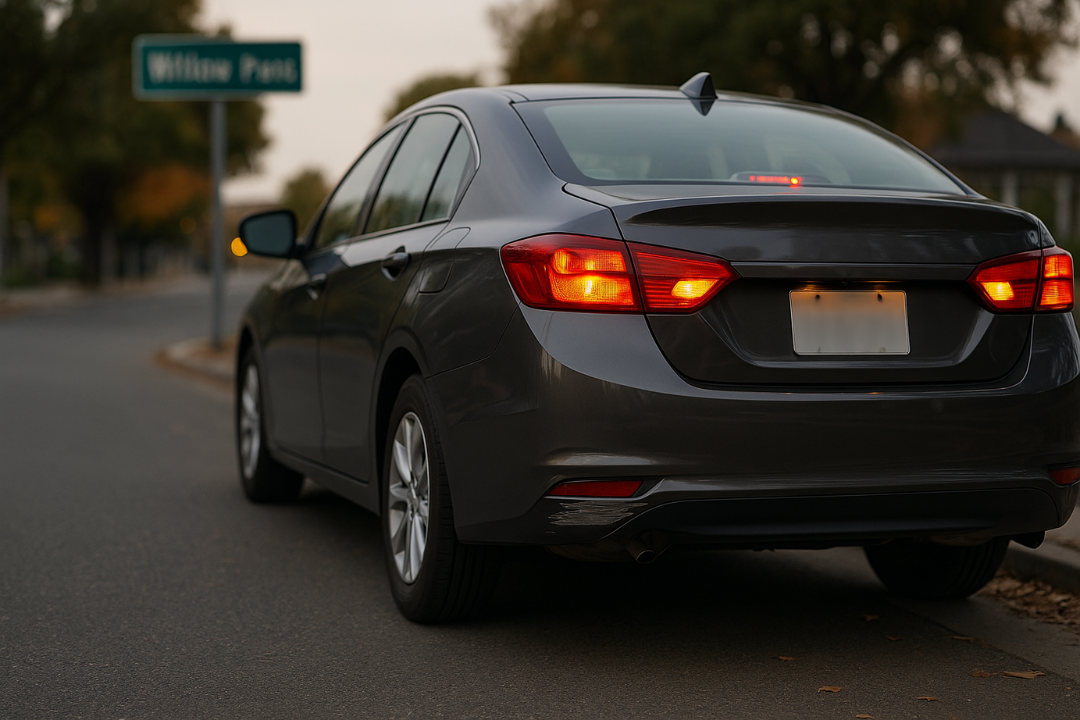
Scraped in a Monument Blvd parking lot or nudged at a light on Willow Pass? If the damage is in your bumper, the big question is: repair or replace? Here’s a clear, Concord-specific guide to how our team at Husteads thinks through the decision—and what your insurer typically wants to see.
Shortcut: When in doubt, start with a quick estimate at our Concord shop. We’ll document the bumper cover and the parts behind it, coordinate with your carrier via Claims & Insurance, and map the fastest safe path to “back to normal.”
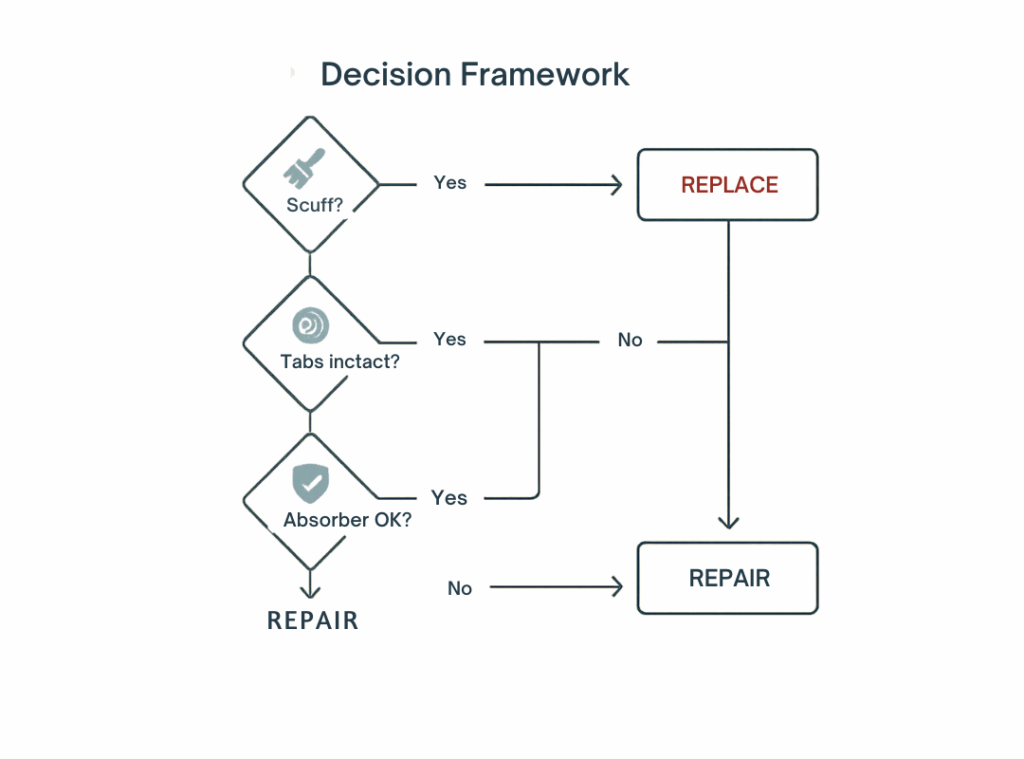
At-a-glance: our decision framework
We lean “repair” when:
- Plastic bumper cover has cosmetic scuffs or shallow dents
- Tabs and mounting points are intact
- No cracks through the plastic; paint damage is limited and refinishable
- Sensors/brackets behind the cover are OK
We lean “replace” when:
- Visible cracks/tears, missing material, or broken tabs
- Deformation to the energy absorber or reinforcement bar behind the cover (see IIHS’s primer on bumper systems)
- Impact area involves ADAS sensors that require precise mounting and post-repair calibration (NHTSA explains driver-assistance tech and why alignment matters)
- Prior heavy filler makes a clean cosmetic repair unlikely
Want the deep dive on parts and procedures? See our Collision Repair Services and Our Process pages. For professional repairability guidance, I-CAR’s RTS articles cover plastic bumper repair considerations and sensor/cover calibration implications.
What insurers look for (and how we make it easy)
1) Clear documentation
We photograph the outside and the structure behind the cover (absorber, beam, brackets) to support the estimate and speed approvals. The Insurance Information Institute’s overview of how auto claims are paid is a good neutral explainer.
2) OEM-informed repairability
Carriers expect shops to follow manufacturer guidance—especially where ADAS lives in the bumper. I-CAR outlines why following OEM procedures (and noting calibrations) is essential.
3) Safety first
If an absorber or beam is compromised, “cosmetic only” is off the table. That structure manages crash energy and sensor alignment.
4) Your right to choose the shop
California protects consumers from steering; see the CA Department of Insurance’s anti-steering guidance.
Step-by-step: how we decide in the shop
- Initial walkaround & photos
We capture panel gaps, paint condition, and any warning lights (learn how we sequence work in Our Process). - Blueprint the bumper area
If the impact isn’t purely superficial, we’ll partially remove the cover to inspect:
- Tabs & brackets (intact or broken)
- Energy absorber (crushed or deformed)
- Reinforcement bar (kinked/bent)
- Sensor housings/wiring (loose, cracked, or misaligned)
- Repairability check
- Repair path: prep/sand/refinish, or plastic weld for minor tears when OEM procedures allow (see I-CAR’s note on plastic repair do’s & don’ts).
- Replace path: new cover (primed), transfer parts, refinish/blend.
- Diagnostics & calibration plan
We perform pre-/post-scans and coordinate any required calibrations so parking sensors and radar/cameras behave normally (context from NHTSA on ADAS). - Estimate transparency
You’ll see parts, labor, refinish, and any calibration listed. We’ll recommend the option that restores safety, fit, and finish with the least downtime.
Repair vs. Replace: quick reference
| Situation | Likely Call | Why |
| Scuffed paint, shallow dent; tabs intact | Repair | Fast refinish, preserve OE fit |
| Clean crack near a mounting tab | Replace | Tabs carry load; crack risks failure |
| Dent over sensor area; paint intact | Case-by-case | Sensor mount accuracy may require new cover |
| Absorber shows crush lines | Replace absorber (and possibly cover) | Energy management compromised |
| Reinforcement bar bent | Replace bar | Structural integrity & future crash performance |
| Previous heavy filler in area | Often replace | Hard to match shape/texture long-term |
Pro tip: If the bumper looks “almost fine,” hidden absorber or bracket damage can still exist. A quick blueprint avoids surprises later.
Why choose Husteads in Concord for bumper work
- Local + certified: Our Concord team follows OEM procedures and I-CAR methodology. Here’s what I-CAR Gold Class recognition signals about training and quality.
- Seamless claims help: We coordinate with most carriers start-to-finish—see Claims & Insurance.
- Lifetime workmanship warranty: Confidence long after you leave (details on our About Husteads and location pages).

FAQs (Concord drivers ask these a lot)
How long does bumper repair take?
Cosmetic refinish can be a few days; add time for parts or calibrations. We’ll give a realistic window during your estimate and text you updates (our overall flow is in Our Process).
Can you heat-reform plastic?
Sometimes, for impressions without cracks—but only if it won’t compromise fit or finish. If tabs or sensor mounts are stressed, we’ll recommend replacement. (I-CAR discusses repairability limits for plastics.)
Will insurance cover OEM parts?
It depends on policy and vehicle age. We’ll explain options (OE/alt/reman) and document why a specific part is required. For general claims context, see the Triple-I’s note on how claims are paid.
Do I need to file anything with the state?
If injuries (even minor) or $1,000+ in damage occurred, California requires an SR-1 within 10 days—see the DMV SR-1 page.
What about a tiny dent with no paint damage (not on a bumper)?
If it’s a metal panel, Paintless Dent Repair may be faster and greener.
Ready to get this off your to-do list?
- Book your estimate at Husteads – Concord
- Bring your claim number (if started) and a few photos
- We’ll blueprint the bumper, align with Our Process, and coordinate Claims & Insurance so you’re back on the road with factory-level fit and finish.