Modern cars rely on Advanced Driver-Assistance Systems (ADAS)—think lane-keeping, blind-spot, auto braking, and parking sensors. After even a “minor” bump, those systems can drift out of spec. Here’s a scan-friendly guide for Berkeley, Oakland, and Walnut Creek drivers on when and why calibration matters and how Husteads handles it.
New to the tech? NHTSA’s overview of driver-assistance technologies explains the features your car may have and why proper alignment/calibration is critical.
At-a-glance: when calibration is usually required
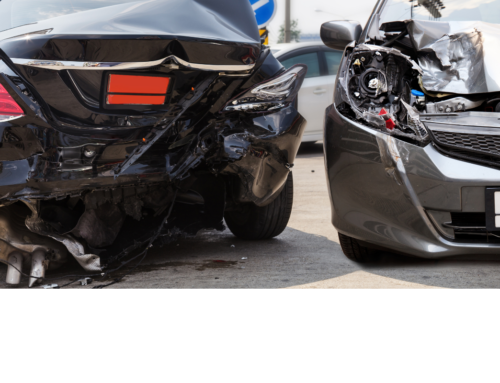
- Front/rear impact involving bumper covers (radar/ultrasonic live here)
- Windshield replacement (forward camera modules)
- Side damage near blind-spot radars or rear cross-traffic sensors
- Ride height / alignment changes that alter sensor angles
- Any ADAS warning lights or driver-assist features behaving oddly
Quick rule of thumb: if body, glass, or suspension work touched an area that houses a sensor or camera, assume a scan + calibration check is on your to-do list.
What “calibration” actually does (plain English)
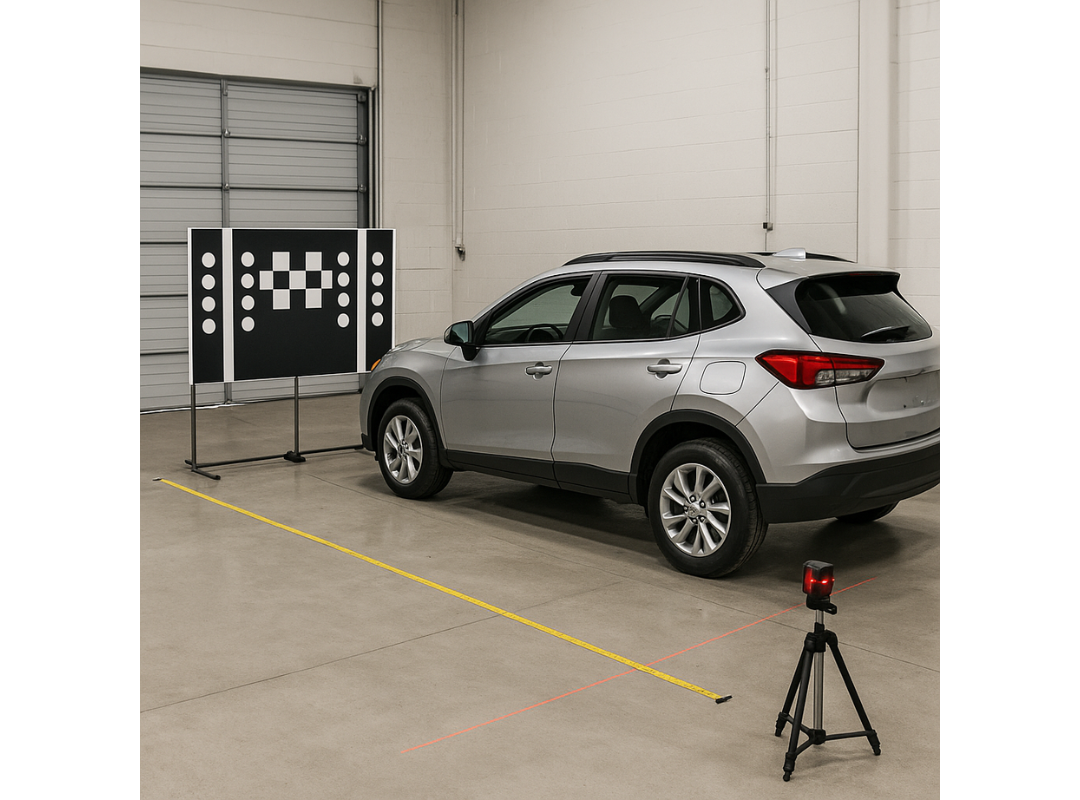
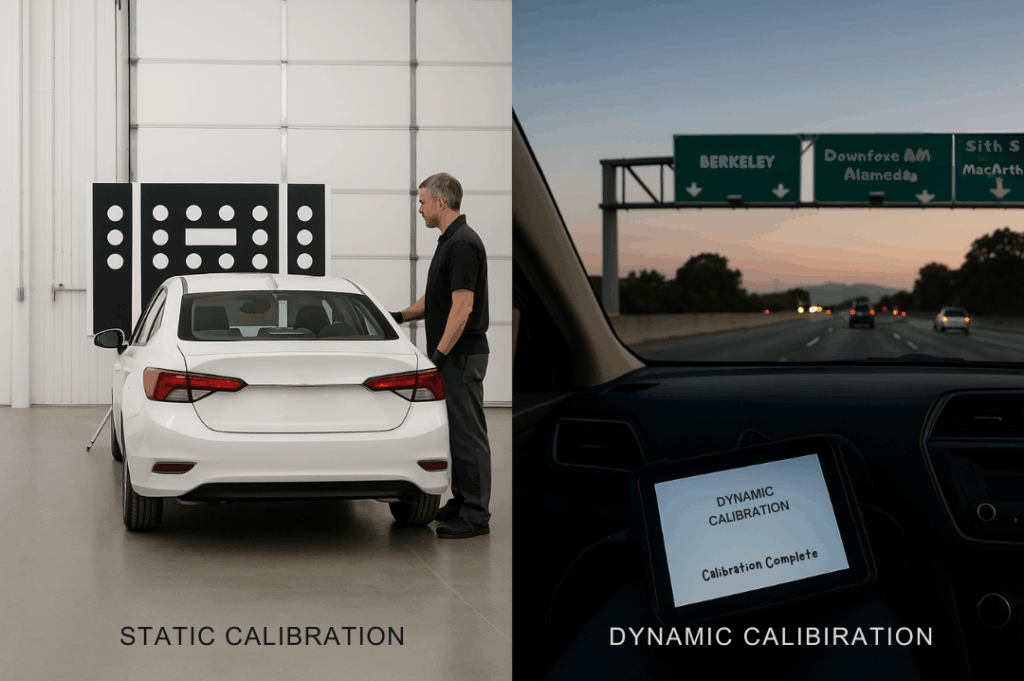
- Static calibration aligns sensors/cameras using targets and precise measurements in a controlled bay.
- Dynamic calibration confirms alignment while driving at specified speeds/routes.
- Many vehicles require both and have OEM-specific steps.
If you want to see typical OEM requirements, I-CAR hosts an OEM calibration requirements lookup with references to target setups and drive cycles.
Safety stakes (it’s not just convenience)
The systems we take for granted—AEB, lane-keep, blind-spot—depend on millimeter-level accuracy. IIHS research into front crash prevention & AEB shows how these features reduce crashes, when they’re correctly set up. A misaligned sensor can delay braking, misread distances, or fail to alert you.
How Husteads handles sensors & calibration (step-by-step)
Start at the location that fits your day:
Berkeley: Durant Ave • North Berkeley • Central Berkeley
Walnut Creek: Walnut Creek
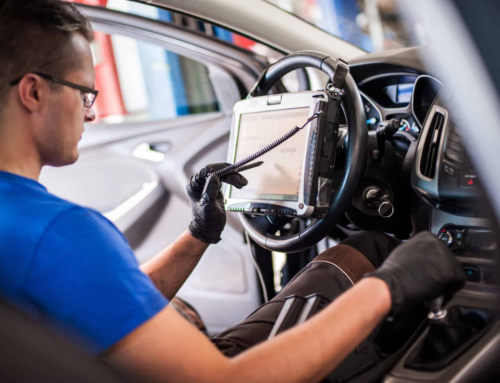
- Pre-repair scan
We connect a scan tool to capture diagnostic codes and sensor status at check-in. This sets a baseline and flags any hidden issues. (See how scanning fits our flow on Our Process.) - Blueprinting the sensor zones
During blueprint/disassembly, we inspect radar brackets, camera mounts, and wiring behind bumper covers, grilles, and windshields. Small bracket shifts = big angle errors. Learn more in Our Process – Collision Repair. - OEM-informed repairs
If parts are bent or out of tolerance, we repair/replace per OEM methods. We follow I-CAR Gold Class training and procedures—here’s what I-CAR Gold Class recognition means for repair quality. - Static calibration
In a controlled space, we set up targets and fixtures at manufacturer-specified distances/angles and calibrate cameras/radars accordingly. - Dynamic calibration & validation
When required, we complete an on-road calibration drive per OEM instructions and re-scan to ensure no ADAS or SRS codes remain. - Post-repair scan + road check
Final confirmation that warning lights are off and assist features behave normally. You’ll see calibration entries and scan results on your paperwork. (Delivery steps in Our Process.)
What you’ll see on your estimate
- Calibration line items (static/dynamic) with target setup notes
- Bracket/holder replacement where mounts were stressed or bent
- Wheel alignment/ride-height check if the OEM procedure calls for it
- Windshield camera re-aim if glass was replaced
If you’re filing a claim, the Insurance Information Institute explains how auto claims are paid. We attach photos and OEM references in the file via Claims & Insurance to speed approvals.

FAQs (East Bay drivers ask these a lot)
Do all cars need calibration after a bumper repair?
Not all—but many modern cars do, because radar/ultrasonic sensors live in the fascia. NHTSA’s primer on driver-assistance tech shows how common these systems are becoming.
My dash has no warnings. Do I still need it?
A light may not come on, yet the sensor can be slightly out of aim. Calibration verifies it’s within OEM spec.
Will insurance cover calibration?
Typically yes if the repair requires it. We document OEM steps and submit with your estimate (see Claims & Insurance).
What if my windshield was replaced?
Most camera-based systems require re-aim/calibration afterward. We coordinate that as part of the repair.
Quick checklist you can screenshot
- After a minor crash, get a pre-scan with your estimate
- Ask if calibration is needed for bumper/glass/suspension work
- Confirm static and/or dynamic calibration steps
- Review the post-scan and take home your paperwork
- Test lane-keep, blind-spot, and AEB on pickup (in a safe area)
For night and bad-weather driving, NHTSA’s night-driving tips are a great refresher—especially after repairs.
Ready for sensor-smart collision repair?
Choose the East Bay location that’s best for you, and we’ll handle the rest—scans, OEM-informed repairs, calibration, and a clean delivery with no guesswork.
👉 Get started: Berkeley • North Berkeley • Central Berkeley • Walnut Creek | Explore Our Process and Collision Repair Services for the full workflow.